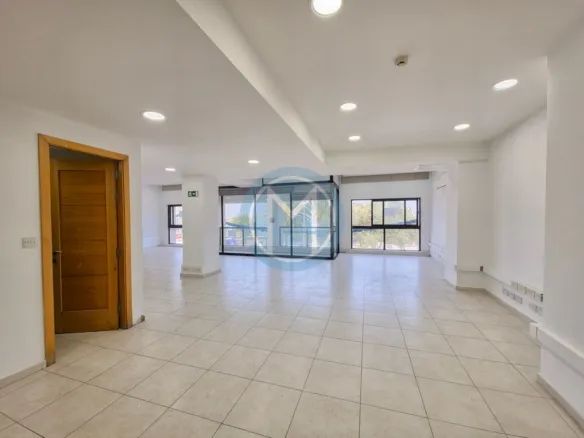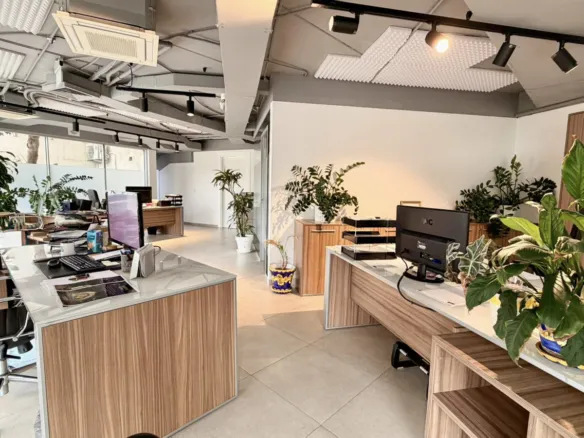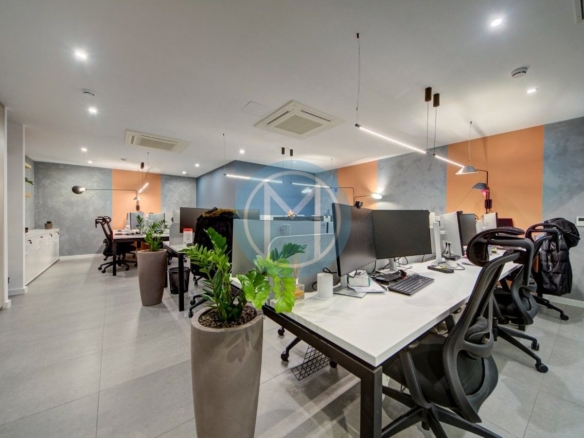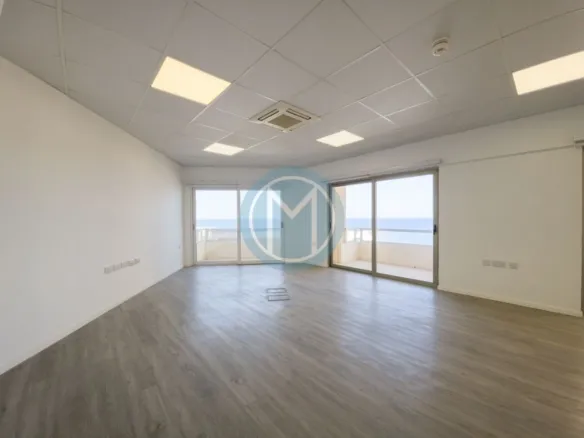

A fintech business has the compliance obligations of a financial firm and the operating pattern of a technology company. That combination makes the office decision genuinely awkward: you need the infrastructure and headcount flexibility of a software business, plus the controls, confidentiality and audit-readiness of a regulated one — and most Malta office stock is built for neither.
If you run a traditional investment, fund, insurance or trust business, the priorities are different — see our guide to office space for financial services companies in Malta.
The Fintech Office Problem
Financial services firms tend to know their headcount three years out. Software companies do not. Fintech sits in between: hiring runs in bursts tied to funding, licensing milestones or a product launch, and the space that suited a twelve-person team is wrong for thirty within a year.
The common mistake is signing a conventional five-year lease on a fixed footprint because it looked cheap per square metre. The cost of that decision is not the rent — it is being unable to hire into the space eighteen months later, or paying for empty desks if the roadmap slips. Before signing, understand how the di fermo (binding) and di rispetto (optional) periods are split.
Substance, Without Over-Committing
MFSA-authorised firms are expected to show genuine substance on the island — effective mind and management here, with real people running the business, not just a registered address.
What it does not require is that a firm over-commits on space before it knows its shape. The practical route most fintechs take is a serviced or managed office that gives a real Malta base from day one, then a move to conventional space once headcount stabilises. Confirm specifics with compliance — expectations differ by authorisation type.
What a Fintech Office Needs
Connectivity you have actually verified
Fibre availability in Malta is a building-level question, not a street-level one. A served road does not guarantee a connection into your unit. Get written confirmation of the service available at your specific floor, the lead time to provision, and whether a second independent carrier route exists.
Power continuity
If you run any customer-facing service from the office — even support — a grid outage is a customer-visible outage. Back-up generation is worth confirming carefully: check whether it covers tenant floors or only common services such as lifts and lighting.
Controlled-access areas
Functions handling customer data or payment operations usually need to sit behind access control, separated from general workspace. Spaces with a flexible internal layout make this straightforward; a fully fixed open-plan floorplate makes it expensive.
Expansion rights, not just floor area
The single most valuable clause for a scaling fintech is a right of first refusal over adjacent space in the same building. It costs nothing at signature and is worth a great deal at month eighteen. Multi-floor business centres are the easiest place to secure it.
Somewhere to put investors
Fintech has a visiting-investor problem that a domestic firm does not. One good meeting room that photographs well and does not require booking a hotel is a small requirement with outsized value.
Where Fintech Companies Sit in Malta
Fintech distributes differently from traditional financial services. Where an investment services firm gravitates to Ta’ Xbiex, fintechs tend to follow talent and flexibility.
St Julian’s and Sliema
The deepest pool of serviced and business-centre space, and the districts that compete best for technical staff. The default choice for teams under about thirty. Browse St Julian’s and Sliema.
Gżira
Waterfront-adjacent, walkable to both Sliema and Msida, and consistently cheaper than the seafront proper. A common choice for teams that have outgrown serviced space but are not ready for a CBD floorplate. Browse office space in Gżira.
Mrieħel
The Central Business District, and where fintechs go when headcount passes roughly forty and floor area starts to dominate the decision. Better parking, larger floorplates, lower cost per square metre. Browse office space in Mrieħel.
Msida and Pietà
Central, well-connected and close to the University of Malta — relevant for firms recruiting graduates or running internship pipelines. Browse Msida and Pietà.
Serviced or Conventional?
A rough rule that holds well in the Malta market:
- Under 15 people, or headcount uncertain: serviced. The per-desk premium buys optionality, and optionality is worth more than margin at that stage.
- 15 to 30 people, headcount reasonably known: either. Run the numbers on a three-year view including fit-out.
- Over 30 people: conventional almost always wins on cost, provided the lease has an expansion mechanism.
Our office space calculator sizes the requirement; the office price calculator estimates cost by district and grade. For a fuller comparison, read Serviced or Conventional Office? or browse offices for 5–15, 15–30 or 30–50 people.
Frequently Asked Questions
Does a fintech company need a physical office in Malta?
MFSA-authorised firms are expected to show real substance on the island, led by effective mind and management in Malta. In practice that usually means premises where staff work rather than a registered address alone. What it requires varies by authorisation type — confirm with compliance before committing to a lease.
Should a fintech start in a serviced office in Malta?
For teams under about fifteen, or where headcount is uncertain, usually yes. A serviced office gives an immediate local base, avoids fit-out capital expenditure, and can be exited or expanded as the picture clarifies.
How much office space does a fintech team need in Malta?
Around 10 square metres per person is a reasonable planning figure before meeting rooms and circulation. A twenty-person fintech typically occupies 200 to 300 square metres once those are included.
What should a scaling fintech negotiate into a Malta lease?
A right of first refusal over adjacent space in the same building is the highest-value clause and usually costs nothing at signature. Also worth negotiating: a shorter di fermo period, and a rent-free period covering fit-out rather than a cash contribution.
Is fibre internet available in all Malta office buildings?
No. Availability is building-specific rather than street-specific, and a served road does not guarantee a connection into a particular unit. Always get written confirmation of the service at your floor and the provisioning lead time before signing.
Where do fintech companies cluster in Malta?
Mainly St Julian’s, Sliema and Gżira for teams under thirty, shifting toward the Mrieħel Central Business District as headcount and floor-area requirements grow.
Related Sector Guides
- Office space for financial services companies in Malta
- Office space for iGaming companies in Malta
- Office space for aviation and aircraft leasing companies in Malta
- Office space for maritime and shipping companies in Malta
Find Fintech Office Space in Malta
We work with fintechs at every stage, from first Malta desk to a scaled headquarters, and we structure shortlists around where a business expects to be in two years rather than only where it is today.
Call +356 7942 3033 or request a callback.
This guide is general information, not legal or regulatory advice. Substance expectations depend on your authorisation; confirm them with your compliance advisers or the MFSA.
Written by Etienne Licari, commercial real estate advisor licensed by the Property Market Agency (licence PB-00144-23), working in Malta’s office market since 2010.