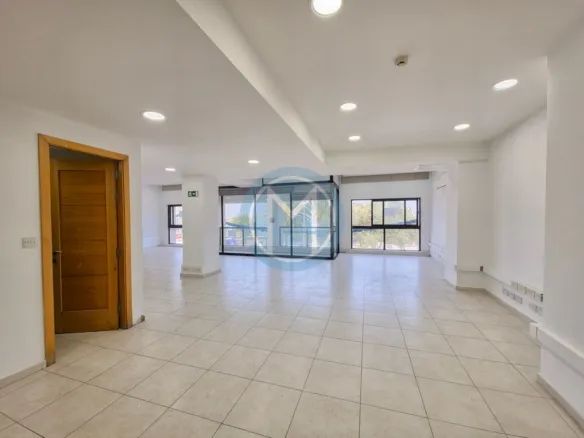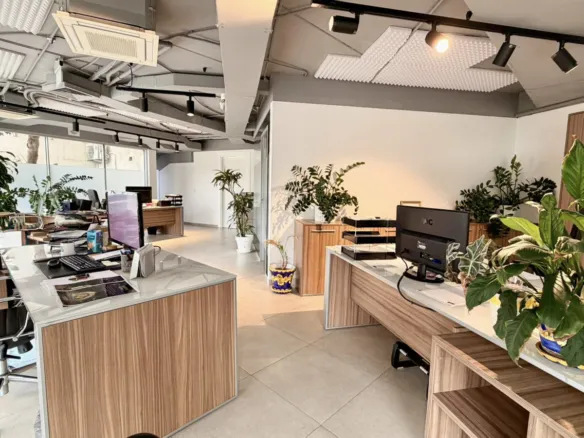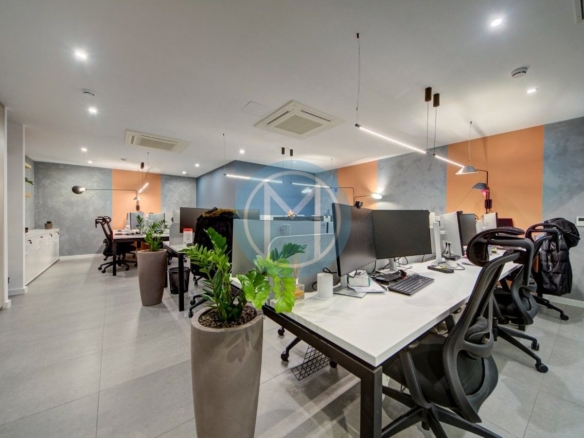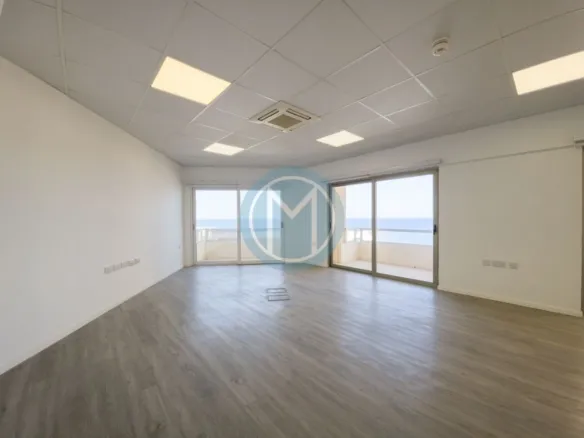

Malta hosts a substantial licensed financial services sector — investment services firms, fund managers, insurance and reinsurance undertakings, trustees and corporate service providers. The office requirements of a regulated financial business differ from a general commercial tenant in three specific ways: where you sit relative to the regulator and the courts, how you handle client confidentiality, and how the space reflects on you when a client or auditor walks in.
If you run a payments, e-money or other technology-led financial business, the trade-offs are different — see our separate guide to office space for fintech companies in Malta.
Why Financial Firms Choose Malta
The combination is an EU-passportable regulatory framework under the Malta Financial Services Authority, English as a working and legal language, a mixed legal system whose commercial law draws heavily on English models, and an established professional services ecosystem — audit, legal, actuarial, compliance — built up over three decades.
For an office decision the relevant point is proximity: regulators, advisers, auditors and counterparties are all within a short radius, and in-person meetings remain a normal part of how the sector operates here.
Operational Substance and Premises
MFSA-authorised entities are expected to demonstrate genuine operational substance in Malta — that the business is actually directed and managed from the island, with effective mind and management on the island rather than a nominal presence.
For an office search this rules out registered-address arrangements as a substitute for real premises. It also tends to push firms toward space that can accommodate on-site record storage, private meeting rooms and, for larger firms, segregated areas for functions that require them.
The specific expectations vary considerably by authorisation type. Confirm your position with compliance before committing to a lease.
What a Financial Services Office Needs
Client-facing space
Unlike a technology business, a regulated financial firm regularly hosts clients, counterparties, auditors and regulators on site. That means a proper reception or waiting area, and meeting rooms that are genuinely private rather than glass boxes in an open-plan floor.
Acoustic separation
Confidentiality obligations are practical as well as contractual. Conversations about client affairs should not be audible across an open floor. Solid partitioning, acoustic treatment and soundproofed meeting rooms matter more in this sector than in most.
Secure document storage
Record-keeping obligations mean most firms need lockable, controlled storage on site, and often a dedicated room rather than cabinets in a corridor. Worth specifying at brief stage, because it is difficult to add later.
A credible address
This is not vanity. For a firm whose product is trust, the building and the address are part of how clients and counterparties assess it. Firms in this sector consistently trade floor area for address quality in a way that other sectors do not.
Where Financial Firms Cluster in Malta
Ta’ Xbiex
The marina frontage has long been the sector’s traditional home — established, quiet, well-regarded, and within easy reach of Msida and Valletta. Popular with investment services firms, trustees and family offices. Browse office space in Ta’ Xbiex.
St Julian’s
Higher-specification modern stock, including landmark buildings, and the deepest concentration of Grade A space outside the CBD. Suits larger firms and international groups. Browse office space in St Julian’s.
Sliema
The largest inventory on the island and the widest range of building grades, which makes it the most flexible option when a specific configuration is needed. Browse office space in Sliema.
Valletta and Floriana
Proximity to the Courts of Justice and government makes the capital attractive to firms whose work is litigation-adjacent or regulatory. Stock is characterful but constrained — heritage buildings carry planning restrictions on alteration and often higher service charges. Browse Valletta and Floriana.
Mrieħel
The Central Business District offers the largest modern floorplates and the best parking on the island, and it is where the MFSA itself is based. Increasingly chosen by larger firms and by back-office and operations functions. Browse office space in Mrieħel.
What It Costs
Financial services firms typically occupy less space per head than technology businesses — more cellular offices and meeting rooms, fewer banks of desks — but at a higher specification and in better buildings, so the cost per person tends to land in a similar place.
Size the requirement first with our office space calculator, then estimate cost by district and grade with the office price calculator, which accounts for the premium carried by seafront and Specially Designated Area addresses.
Frequently Asked Questions
Does an MFSA-licensed firm need a physical office in Malta?
Authorised entities are expected to demonstrate real operational substance in Malta — the business genuinely directed and managed from the island, with effective mind and management here. A registered address alone does not meet that expectation. The detail varies by authorisation type, so confirm with compliance before signing a lease.
Where are most financial services firms based in Malta?
Ta’ Xbiex is the sector’s traditional centre, with significant clusters in St Julian’s, Sliema and Valletta. Larger operations and back-office functions increasingly take space in the Mrieħel Central Business District.
How much office space does a financial services firm need?
Firms in this sector typically need more square metres per person than a comparable technology business, because of cellular offices, private meeting rooms and secure storage. Allow 12 to 15 square metres per person as a planning figure rather than the usual 10.
Can a regulated firm operate from a serviced office in Malta?
Smaller firms frequently do, particularly while establishing. The constraints are confidentiality and secure storage — both harder to satisfy in shared space — so firms tend to move to dedicated premises as headcount and record-keeping obligations grow.
Do financial services offices in Malta need to be near the regulator?
There is no requirement to be, and Malta is small enough that nowhere is far. In practice firms value being close to auditors, legal advisers and clients, which is part of why Ta’ Xbiex, Sliema and St Julian’s remain popular; the MFSA itself is in Mrieħel.
What should a financial firm negotiate into a Malta office lease?
Beyond rent: a clear position on who pays for partitioning and acoustic works, the scope of the service charge, the security deposit (garanzija) and, where headcount is expected to grow, a right of first refusal over adjacent space in the same building.
Related Sector Guides
- Office space for fintech companies in Malta
- Office space for iGaming companies in Malta
- Office space for aviation and aircraft leasing companies in Malta
- Office space for maritime and shipping companies in Malta
Find Financial Services Office Space in Malta
We work with regulated firms on brief, shortlist, viewings and lease negotiation, and we understand the specification differences that matter in this sector. Tell us headcount, meeting-room requirement, storage needs and target district.
Call +356 7942 3033 or request a callback.
This guide is general information, not legal or regulatory advice. Substance expectations depend on your authorisation; confirm them with your compliance advisers or the MFSA.
Written by Etienne Licari, commercial real estate advisor licensed by the Property Market Agency (licence PB-00144-23), working in Malta’s office market since 2010.